The private long-term care insurance (LTCI) industry remains an important option to help individuals finance the cost of long-term care (LTC). This paper provides summaries and insights on key statistics for the entire stand-alone1 LTCI industry.
Based on a thorough review of company-submitted data from the year-end 2024 Long-Term Care Experience Reporting Forms2 (ERFs) of the National Association of Insurance Commissioners (NAIC), we summarize key statistics and observations across the LTCI industry for stand-alone products. We anticipate future years’ iterations of our report may include additional information on reserves, new issues, and demographic experience, as well as on combination products that include LTC.
Key findings from our look at long-term care insurance industry Experience Reporting Forms
The demand for LTC across the country has grown over the last decade as Americans continue to age. The funding mechanism for LTC services has also evolved, with covered lives in the stand-alone market declining, combination products increasing in popularity, and publicly funded benefits becoming available in some areas.
We observed the following in our analysis of the 2024 ERFs compared to ERFs from previous years:
- We observe covered lives decreasing by 1% to 3% annually over the last decade. Despite this decline, as of year-end 2024, approximately 5.8 million individuals still had stand-alone LTC insurance coverage. For reference, using the entire U.S. population age 60 and older as the denominator as a simplifying assumption, the 5.8 million individuals would imply approximately 7% of individuals age 60 and older have stand-alone LTCI coverage.
- After higher-than-average claim size and lower overall claim counts during the COVID-19 pandemic, both claim size and claim counts have reverted to pre-pandemic trends in recent years.
- Average premium rates have increased steadily over the past decade due to rate increases implemented by many LTC carriers and take-up of future purchase options. Claim levels have been rising at a higher rate than premium levels, which is generally expected due to the pre-funding approach used by LTC policies. We also observe an increase in reserves, which we generally expect given the ongoing contributions to reserves from premiums.
- The ERFs also allowed us to observe variance from state to state. For example, there was a large increase in stand-alone LTC policy purchases in the state of Washington in 2021 and 2022, which coincided with the window for Washingtonians to opt out of a state payroll tax established to fund the WA Cares Fund, a state-based LTC program. Additionally, the cost of LTC differs greatly from state to state and can affect the overall demand for LTC financing.
Background on the long-term care insurance industry
Long-term care services and needs
LTC refers to a range of services and supports for individuals who need assistance with daily living tasks, such as bathing, dressing, ambulation, transfers, toileting, medication administration or assistance, personal hygiene, transportation, and other health-related tasks. Often, this type of assistance is needed by individuals who experience functional limitations due to age or physical or cognitive disability. LTC includes services provided in:
- Institutional settings: includes skilled, intermediate, and custodial care provided in an institutional facility setting, such as a nursing home or dedicated wing of a hospital.
- Home and community-based settings: includes care provided in a person’s own home or in a community-based setting, such as an assisted living facility or adult family home. Coverage typically includes both the services rendered and the room and board in a community-based setting.
Services are significantly, and often prohibitively, expensive without traditional LTCI or Medicaid eligibility. According to the CareScout-Genworth Cost of Care Survey 2024, the annual median costs are approximately $78,000 for a home health aide, $71,000 for assisted living services, and $111,000 for skilled nursing facility care.3
Long-term care coverage over time
The LTCI industry has evolved significantly, expanding from traditional LTCI policies to include hybrid policies and even a state-based social LTCI program in Washington state. These developments have substantially reshaped the industry landscape. The sections that follow focus on the overall size of the stand-alone LTCI industry with respect to covered lives, claims, benefits, and premiums, including changes over the last decade.
Some volatility observed since 2020 may be attributed to the COVID-19 pandemic. Additionally, it is important to note that the NAIC updated the format of the ERFs for year-end 2020. As a result, some of the changes we observed during this period may be influenced by companies reporting numbers differently than in previous years.
Lives covered by long-term care insurance
Approximately 5.8 million individuals have stand-alone LTC insurance coverage through a private LTCI policy as of 2024. The number of covered lives has been declining over the last decade. Policy terminations have outpaced new policy issues by approximately 127,000 individuals per year over the last decade, attributable to overall declining new sales during that period. When sorting companies from high to low by earned premium in 2024, nearly 60% of all private LTCI policyholders are covered by one of the top five largest companies (see Figure 1). The top five companies based on 2024 in-force premium (and consistent with 2023) are Genworth, John Hancock, Northwestern Mutual, MetLife, and Unum.
Figure 1: Private LTCI covered lives by calendar year and company size (thousands)

Count of long-term care insurance claims
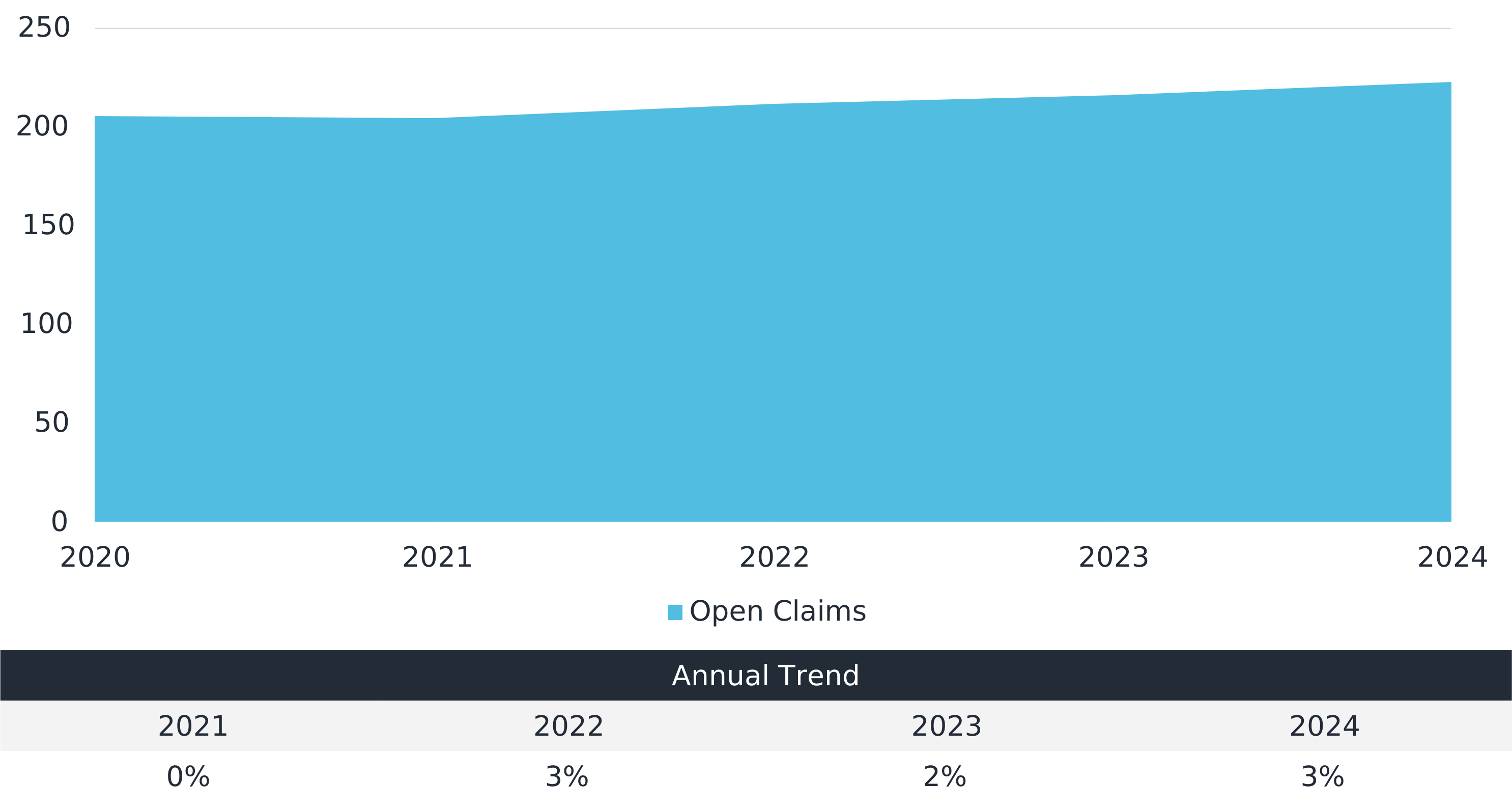
In contrast to decreasing covered lives, we observe mostly increasing open claims since 2020. Open claims remained relatively flat from 2020 to 2021, likely due to the COVID-19 pandemic, but grew by 2% to 3% annually from 2022 to 2024. Although open claims have increased in recent years, we cannot compare the level of open claims before 2020 due to ERF changes in the reporting of open claims as of 2020.
Figure 2: Count of open private LTCI claims at end of calendar year (thousands)
In addition to analyzing claim counts, we summarized trends in claim rates.
- Prevalence rates (illustrated in Figure 3) are defined as the percentage of total insured individuals with an open claim. With the exception of the COVID-19 experience from 2020 to 2021, we have generally observed the count of covered lives decreasing, whereas the count of open claims has increased. As a result, we see the claim prevalence consistently increase through 2024.
- Incidence rates (illustrated in Figure 4) represent the percentage of total insured individuals with a new claim initiated each year.4 Incidence rates increased annually until 2020 but subsequently decreased in 2020 during the pandemic. This pattern aligns with the 2021 SOA report conducted by Milliman, COVID-19 Impact on Long-Term Care Insurance (2021 SOA COVID Study), in which companies reported lower claim incidence in 2020.5 Unlike claim prevalence, however, incidence rates grew in 2021 and even surpassed 2019 levels by 2022.
Figure 3: Prevalence rate by line of business, open private LTCI claims as % of total covered lives
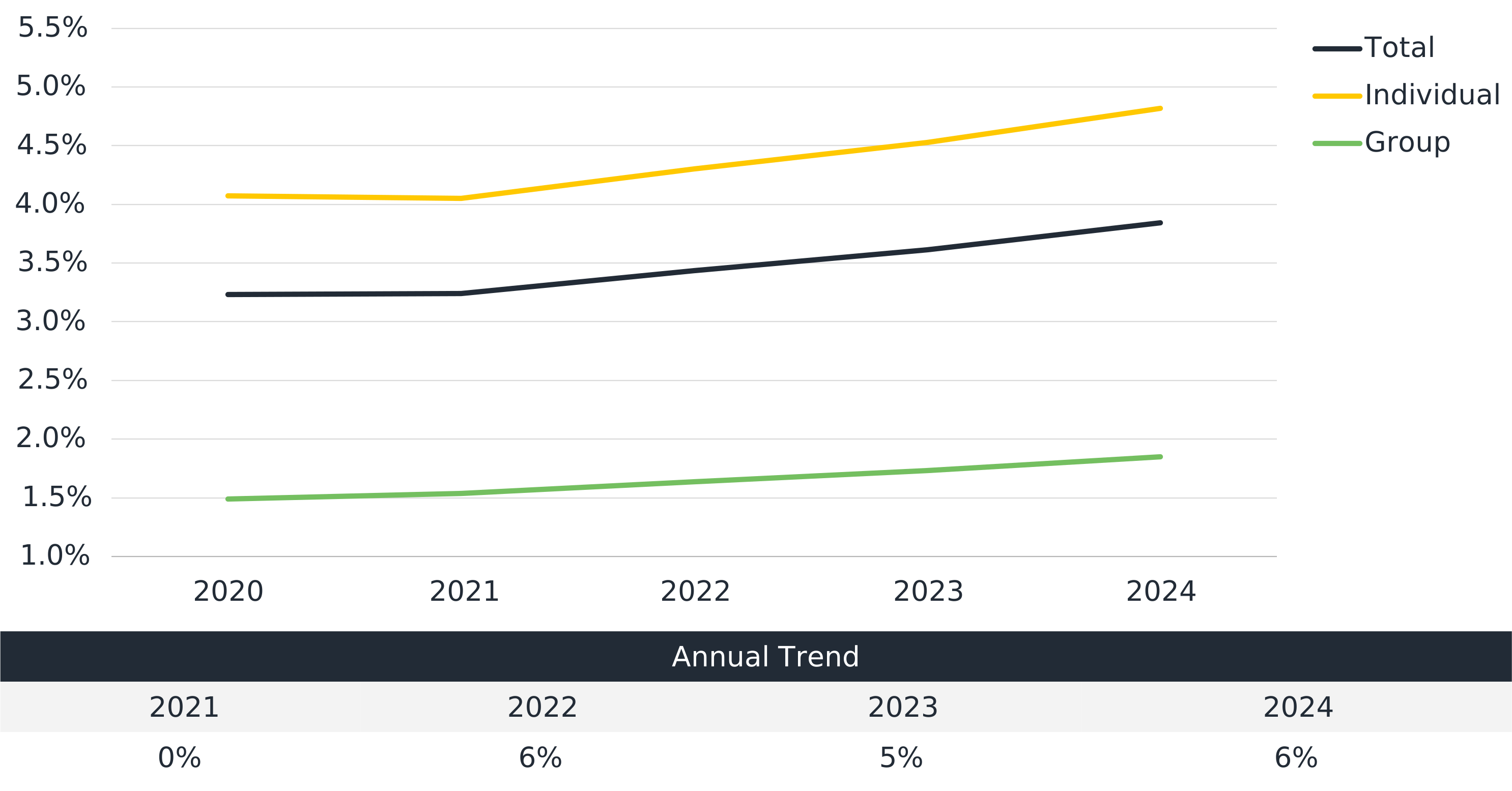
Figure 4: Incidence rate by line of business, new private LTCI claims as % of total covered lives

When examining trends further by individual and group business, Figures 3 and 4 show that prevalence and incidence are generally higher for individual business. Potential causes for this relationship include differences in insured characteristics, such as:
- Average attained age. Group business generally has a lower average attained age than individual business, which could yield lower prevalence and incidence rates.
- Average policy year. Group business may have been issued more recently, on average, compared with individual business, which could also yield lower prevalence and incidence rates.
Long-term care insurance benefit dollars
The growth in open claim counts highlights the changing size of private LTCI as a payer for LTC services, and the growth in annual benefits incurred over the last decade underscores this point. Figures 5 and 6 illustrate this growth: Annual incurred LTCI claims have risen by over 80% since 2015, reaching approximately $17 billion in 2024. We observe that annual benefits remained flat in 2020 after years of steady increases. The claims trend subsequently increased, approaching historical levels in 2021 and beyond.
Individual LTC plans account for the majority of claims in Figure 5, representing approximately 88% of total claim dollars in 2024. The dominance is driven by a larger number of covered lives and older policyholders compared to group LTC plans.
Figure 5: Annual incurred private LTCI claims by line of business ($ millions)

Figure 6 shows that roughly half of the 2024 claims were from the five largest companies (based on 2024 in-force premium), a proportion that has generally increased over the past decade. Notably, the five largest companies account for an even greater share of covered lives, representing 58% as illustrated in Figure 1.
Figure 6: Annual incurred private LTCI claims by company size ($ millions)

The change in annual incurred claims is attributable to the change in claimant counts and the growth in the average size of claims. As seen in Figure 7, the average claim size increased from roughly $110,000 in 2015 to $180,000 in 2024.
ERF data showed the count of open claims decreased in 2020, whereas the average claim size for those on claim increased by 18% during the same period, as illustrated in Figure 7. The relationship between claim counts and claim size may suggest a shift in the distribution of care by situs. For example, in the 2021 SOA COVID Study, some companies noted that a higher proportion of individuals who would ordinarily pursue home health care were delaying their use of LTC, compared to those requiring more expensive facility-based care during the COVID-19 pandemic.6 The net impact of claim counts dropping and average claim sizes increasing produced a flat trend in total claim dollars into 2020, as shown in Figure 6.
Interestingly, the average claim size decreased in 2022 and remained relatively flat in 2023 compared to 2020 and 2021. This is consistent with the notion that claims during the pandemic were likely devoid of facility care as individuals deferred facility care relative to home health care during that time.7 In 2024, claim size increased 8% over 2023, potentially indicating a return to pre-pandemic claim trends.
Figure 7: Average private LTCI claim size by line of business

Long-term care insurance premiums
As incurred claims have steadily increased over the last decade, so too have premiums (albeit to a lesser extent). This relationship is observed in Figure 8.
Figure 8: Average private LTCI premiums and claims per covered life

Given the lack of new sales, the relationship between premiums and claims in Figure 8 primarily arises due to the pre-funding approach used by LTC policies. The pre-funding approach relies on charging policyholders a premium that is intended to be level for life, such that expected premiums exceed expected benefits plus expenses in the early years, and that relationship flips in later policy years. The excess premium in the early years produces reserves intended to cover the future premium shortfall. The relationship between claims and premiums shown in Figure 8 has helped contribute to reserves reaching approximately $226 billion in 2024.
As the stand-alone population ages, we expect reserves to rise to meet the higher anticipated claims, reflecting the increased likelihood of older individuals going on claim. Although we expect reserves to rise in the near term, they will reach an inflection point in the future as terminations increase across the aging population and as fewer new policies are sold in the stand-alone market.
We note that the COVID-19 pandemic did not have a significant impact on premiums relative to its impact on claims.
Long-term care insurance differences by state
Differences in the LTC trends from state to state are common, as many factors contributing to the cost and funding of LTC vary across the nation. These factors include the following.
- Rate increases are approved at different rates and for different amounts for the same carriers in different states, impacting average premium levels by state.
- The discussion and adoption of publicly funded LTC benefits have driven changes to the future landscape of the stand-alone LTC market.8 Notably, the WA Cares Fund, implemented in Washington state, provides an LTC benefit funded by a mostly mandatory payroll tax. As part of the program, individuals could opt out of the state tax if they had purchased private market LTCI before November 2021. This led to an abnormal increase in LTC policy purchases in Washington before the deadline and is reflected in the penetration rate for the state in Figure 9.
- There are tax advantages to purchasing LTCI policies in certain states, which may increase the popularity of LTCI in those states.
The prevalence of individuals covered in the stand-alone LTC market in this paper is defined as the number of individuals that currently own a stand-alone LTC policy divided by the number of individuals in a population over age 60. Since some policyholders may be below age 60, this definition is a proxy for true private LTCI prevalence. For reference, the average issue age in 2023 for an LTCI policy was 57.9
Figure 9: Private LTCI prevalence for individuals over age 60

Claim amounts have also differed in each state as the cost of care varies from state to state. Figure 10 shows the relativity of average 2024 claims in each state. We observe states with larger populations of older individuals to have higher claim costs.
Figure 10: Private LTCI average 2024 claim amount by state

Methodology and assumptions for gathering summary statistics from the Experience Reporting Forms
The analysis in this paper was based on a thorough review of company-submitted data from the NAIC’s year-end 2024 Long-Term Care ERFs retrieved from S&P Global. Data from each ERF form was compiled and summarized for each company code and compared to prior year ERF submissions. Data was reviewed for reasonableness and adjusted where appropriate, as not all companies may have filled out the ERFs consistently. All numbers and figures in the report were developed based on cleaned data from Forms 1 and 5 of the 2024 ERFs. We relied on each company’s ERF submission for this paper. Results in this paper may not be accurate to the extent that each company’s ERF submission is not reflective of the company’s experience.
1 Stand-alone LTC insurance provides only LTC coverage, while combination (hybrid) products pair LTC benefits with life insurance or an annuity.
2 All data in this paper comes from company-submitted 2024 year-end NAIC Long-Term Care Experience Reporting Form 1 and Form 5.
3 Genworth-CareScout. (n.d.). Calculate the cost of long-term care near you. Retrieved November 5, 2025, from https://www.carescout.com/cost-of-care.
4 According to the NAIC, new claims are defined as “claims that have at least one benefit payment made during the year after the elimination period but have no payments in previous years.” Retrieved November 12, 2025, from https://content.naic.org/sites/default/files/inline-files/2020-14BWG.pdf.
5 Bergerson, M., Dalton, A., Duxbury, A., Eaton, R., & Stoltzfus, J. (October 2021). Covid-19 impact on long-term care insurance report 2021 survey. Society of Actuaries and Milliman. https://www.soa.org/globalassets/assets/files/resources/research-report/2021/covid-19-impact-ltc.pdf.
6 Bergerson, M., Dalton, A., Duxbury, A., Eaton, R., & Stoltzfus, J. (October 2021). Covid-19 impact on long-term care insurance report 2021 survey. Society of Actuaries and Milliman. https://www.soa.org/globalassets/assets/files/resources/research-report/2021/covid-19-impact-ltc.pdf.
8 Giese, C., Schmitz, A., Gunnlaugsson, A., & Brown, K. (2022, July 7). Preparing for the unknown: A journey on public LTC program design. Milliman. https://www.milliman.com/en/insight/preparing-for-the-unknown-public-ltc-program-design.
9 Thau, C., Gaspar, N. & Giese, C. (2024, July 14). 2024 Milliman long term care insurance survey. Broker World. https://brokerworldmag.com/2024-milliman-long-term-care-insurance-survey/.